A professional film production equipment list for a Toronto shoot covers five core departments: camera, lighting, audio, grip and electric, and post-production. The specific items required vary by project type, budget, and location. This guide covers the standard equipment expectations for commercial, corporate, and branded content productions in Toronto.
Why Does the Right Equipment List Matter for a Toronto Production?
A film production is only as capable as the equipment brought to set. Missing a critical piece of gear during a shoot in Toronto, whether a specific lens for a tight interior or a backup audio recorder on a location with heavy ambient noise, creates delays, compromises quality, or forces a reshoot.
Ontario Creates programs support Ontario-based productions and can inform decisions about qualifying equipment expenditure on funded projects. Understanding what equipment costs qualify under each program is part of budget planning for productions seeking provincial support.
What Camera Equipment Does a Toronto Film Production Typically Need?
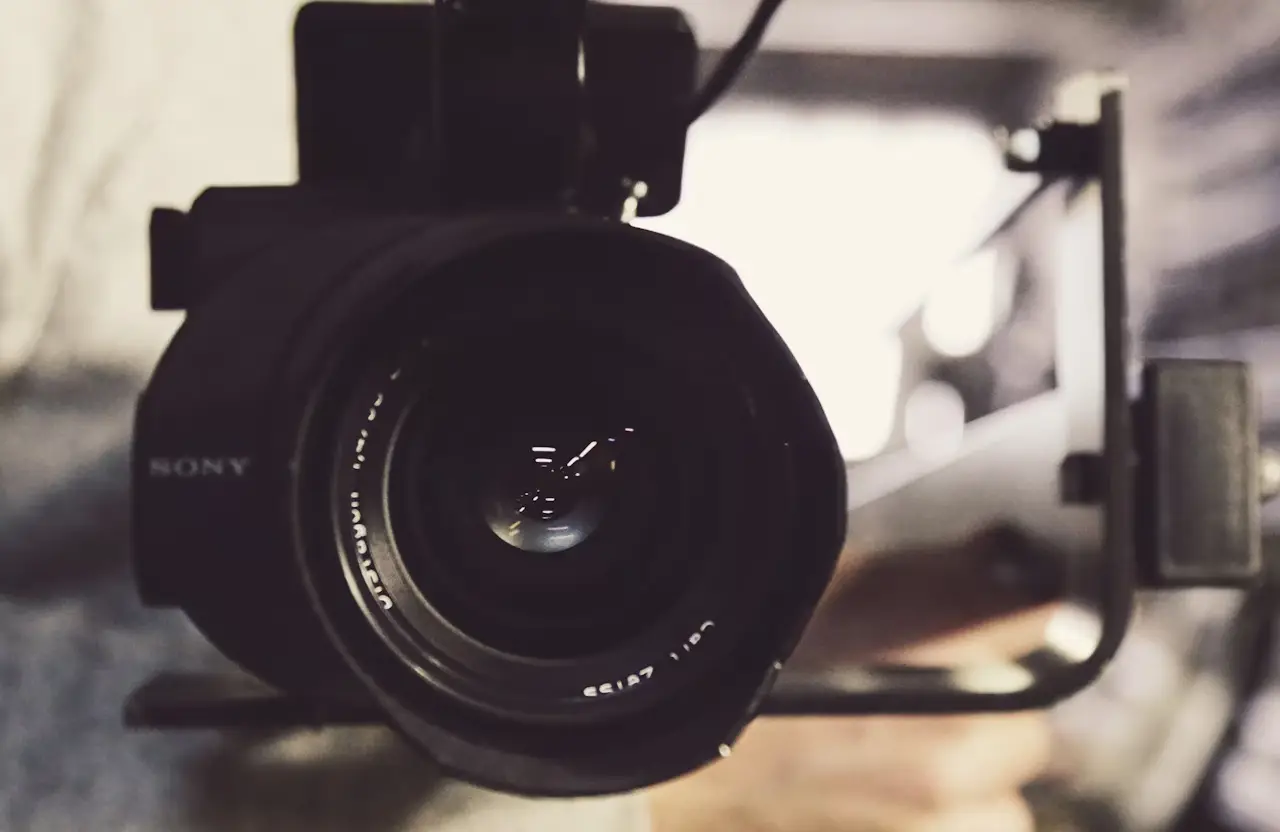
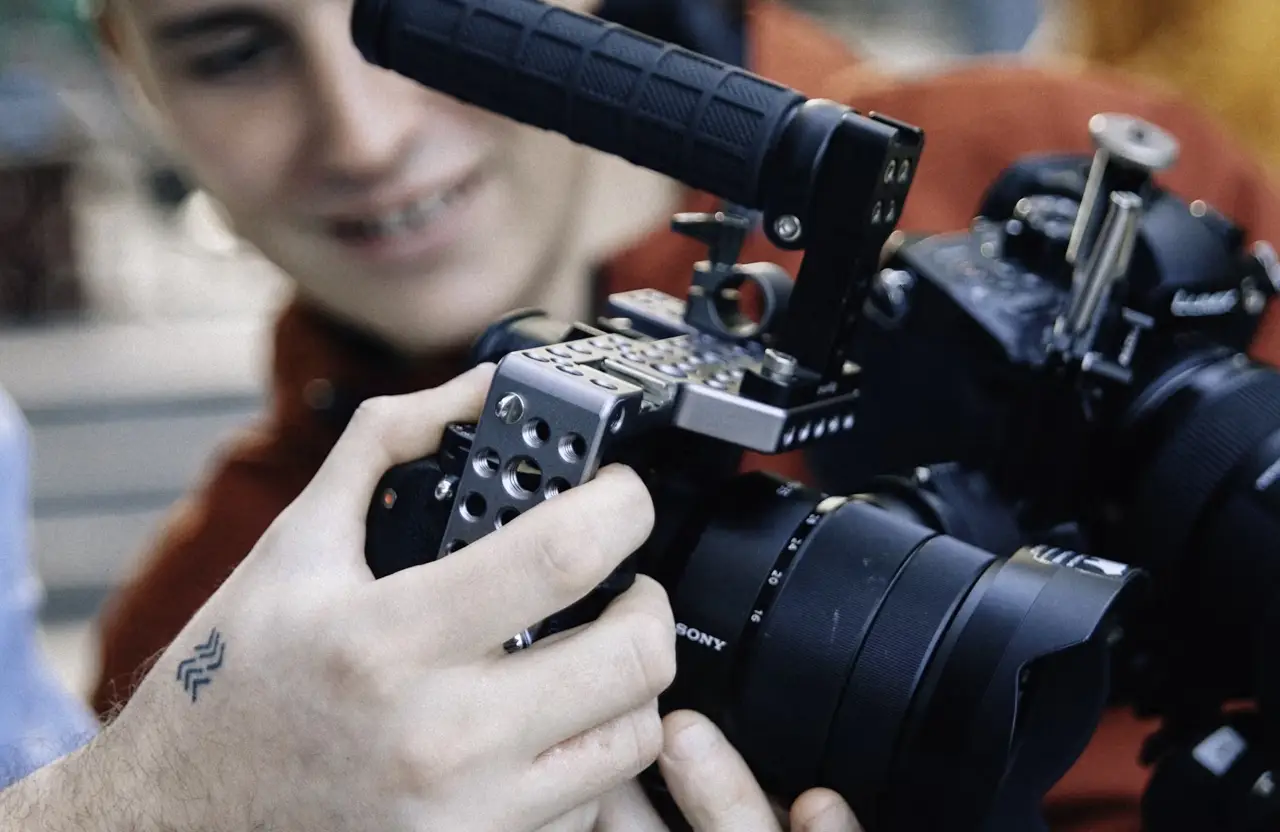
Camera department choices depend on the project format, intended delivery platform, and the director of photography’s preferences. The table below covers standard equipment for commercial and corporate productions in Toronto.
|
Camera Department Item |
Use Case |
|
Primary cinema camera (Sony FX9, ARRI Alexa Mini) |
Principal photography for commercial and film productions |
|
Second camera body |
B-roll coverage, interviews, or equipment backup |
|
Prime lens set (24mm, 35mm, 50mm, 85mm) |
Controlled lighting environments, shallow depth of field |
|
Zoom lens (24-70mm, 70-200mm) |
Run-and-gun, event coverage, documentary-style shoots |
|
Follow focus system |
Precise focus pulling for narrative and commercial work |
|
Monitor / director’s viewfinder |
On-set review for director and director of photography |
|
Camera stabiliser or gimbal |
Moving shots without dolly infrastructure |
|
Drone with 4K camera |
Aerial establishing shots at exterior Toronto locations |
What Lighting Equipment Is Standard for Toronto Film Productions?
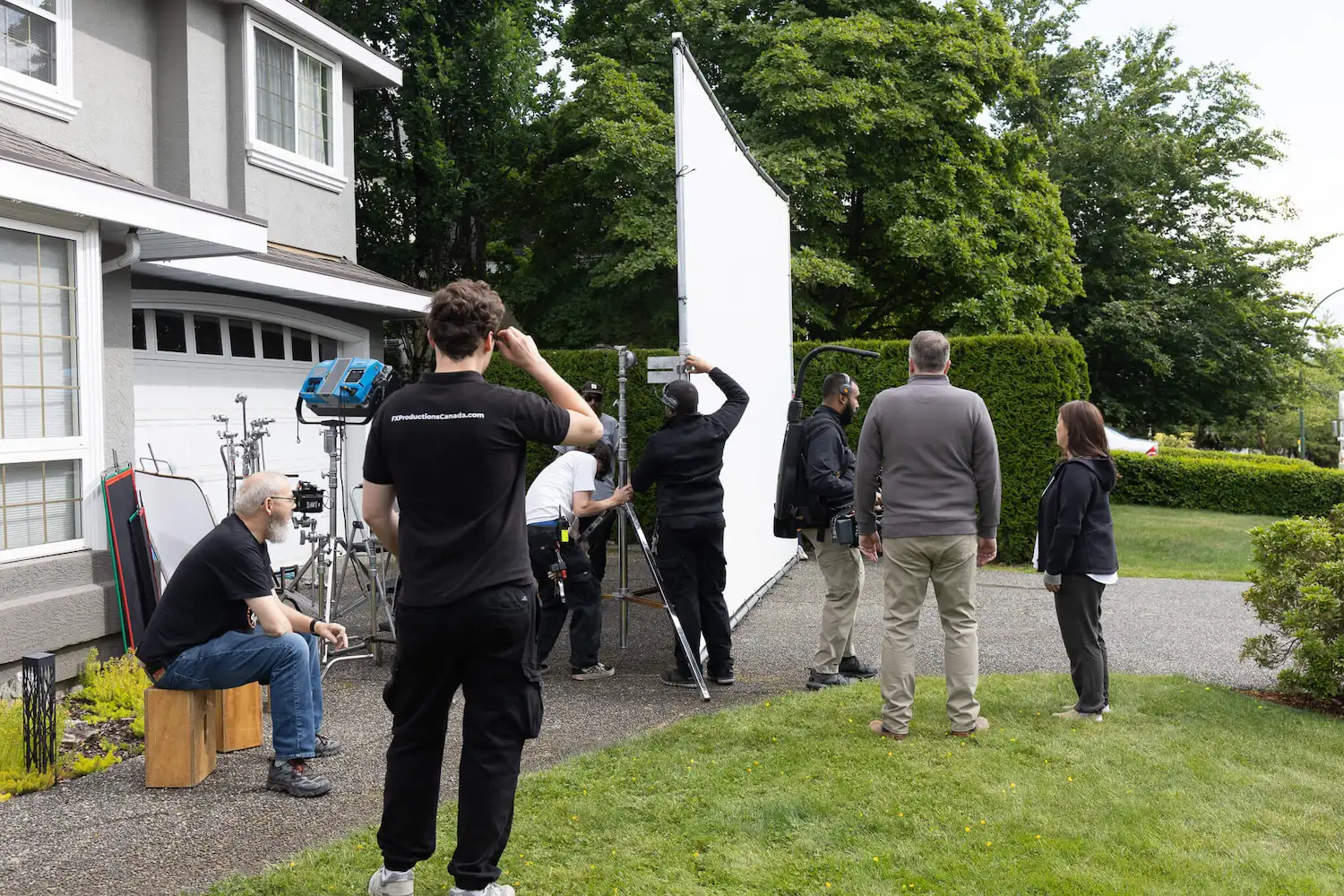
Cinematic videography for commercial productions in Toronto draws on a combination of LED panels, HMIs for daylight-balanced exterior work, and tungsten or Fresnel fixtures for controlled interior environments. Lighting is the department most affected by location type.
|
Lighting Item |
Application |
|
LED panel lights (various sizes) |
Flexible indoor and outdoor fill and key lighting |
|
HMI fixtures |
Daylight-balanced exterior work and large interior spaces |
|
Softboxes and diffusion frames |
Softening light sources for interviews and product shots |
|
Reflectors and flags |
Controlling and shaping natural light on location |
|
Practical LED bulbs |
Matching and supplementing existing location lighting |
|
Light meters |
Ensuring correct exposure across all light sources on set |
What Audio Equipment Is Required for a Toronto Film Production?
Audio quality is the most frequently underestimated variable in production planning. Poor audio recorded on set is extremely difficult to repair in post-production. Toronto’s urban environment introduces ambient noise from traffic, transit, and construction that requires proper microphone selection and placement discipline.
|
Audio Item |
Use Case |
|
Shotgun microphone (Sennheiser MKH 416) |
Primary dialogue recording on set and location |
|
Wireless lavalier system |
Interview subjects, presenter coverage, scripted dialogue |
|
Portable audio recorder (Sound Devices MixPre) |
Multi-channel on-location audio capture |
|
Boom pole and shock mount |
Positioning directional microphone above frame |
|
Wind protection (blimp or deadcat) |
Exterior Toronto shoots where wind noise is a factor |
|
Slate / clapperboard |
Synchronising audio and video in post-production |
|
Backup recorder |
Redundancy for critical audio capture |
What Post-Production Tools Are Part of a Toronto Production Workflow?
Visual effects work for commercial and branded content productions is handled by FX Productions Canada in-house, reducing the handoffs required between production and post. Toronto’s post-production community supports the full pipeline from editorial through colour grading, sound mixing, and compositing. CAPIC photography standards also address commercial content delivery specifications relevant to productions combining photography and video in a single engagement.
|
Post-Production Tool |
Function |
|
DaVinci Resolve (editing and grading) |
Assembly editing, colour correction, and finishing |
|
Adobe Premiere Pro |
Non-linear editing for commercial and corporate content |
|
Pro Tools or Logic Pro X |
Audio mixing, dialogue editing, and sound design |
|
After Effects / Nuke |
Motion graphics and visual effects compositing |
|
Shared storage or NAS drive |
Collaborative access to project media during post |
|
Calibrated reference monitor |
Accurate colour evaluation during grading |
|
Cloud or LTO tape backup |
Long-term archiving of project media and deliverables |
Plan Your Toronto Production with FX Productions Canada
FX Productions Canada provides full production services for Toronto-based commercial, corporate, and branded content shoots, including camera, lighting, audio, and post-production support. To discuss your project equipment requirements and receive a complete production plan, contact us and our team will follow up within one business day.
Frequently Asked Questions About Film Production Equipment in Toronto
1. Should I rent or buy equipment for a Toronto film production?
For most commercial and corporate productions in Toronto, renting is more cost-effective than purchasing. Equipment needs vary significantly between projects, and rental allows access to specific cameras, lenses, and lighting rigs that match each project’s requirements without capital outlay. Full-service production companies like FX Productions Canada own and maintain core production equipment as part of their production services package, reducing rental overhead for clients.
2. What camera is most commonly used for commercial production in Toronto?
Commercial productions in Toronto commonly use the Sony FX9, Sony Venice, ARRI Alexa Mini LF, and RED MONSTRO depending on budget and aesthetic requirements. FX Productions Canada uses professional cinema cameras appropriate to each project’s delivery format. Review our work for examples of commercially produced content across a range of camera and format configurations.
3. What drone equipment is used for aerial footage in Toronto?
Aerial footage for Toronto productions typically uses DJI Inspire 2 or Matrice series drones with interchangeable camera systems capable of 4K or higher resolution capture. Commercial drone operations in Toronto require a Transport Canada Advanced RPAS Certificate. FX Productions Canada operates fully licensed drones. Visit our drone services for details on aerial capabilities for Toronto shoots.
4. How does audio equipment selection change for outdoor Toronto shoots?
Outdoor shoots in Toronto introduce wind noise, traffic, and transit sounds requiring more aggressive wind protection and microphone selection. A blimp housing with a deadcat cover is standard for exterior work. Sound design in post-production can address some location noise but cannot replace proper on-location microphone discipline.
5. What is the minimum equipment list for a corporate video in Toronto?
A minimum professional corporate video setup includes: one cinema camera body with two lenses, one audio recorder with a shotgun and one wireless lavalier, one LED light panel for interview key lighting, and a portable drive for on-set backup. Corporate video planning at FX Productions Canada begins with a detailed equipment assessment during pre-production.
6. What grip and electric equipment is needed on a Toronto shoot?
Grip and electric covers c-stands, sandbags, apple boxes, flags, diffusion frames, extension cables, power distribution units, and gaffer tape. Full-service production partners handle grip and electric as part of a comprehensive production package so clients do not manage individual equipment categories separately.
Key Takeaways
- A professional film production equipment list covers five departments: camera, lighting, audio, grip and electric, and post-production.
- Renting equipment for each project is more cost-effective than purchasing for most commercial and corporate productions in Toronto.
- Audio equipment selection for outdoor Toronto shoots must account for urban ambient noise from traffic, transit, and construction.
- Drone operations for aerial footage in Toronto require a valid Transport Canada Advanced RPAS Certificate for commercial use.
- DaVinci Resolve is the standard tool for colour grading and editing across Toronto’s commercial post-production community.
- Full-service production companies own and maintain core equipment as part of their packages, reducing client rental overhead.