Subject matter in photography is the primary focus of an image: the person, place, object, or concept the photographer wants the viewer to notice first. Choosing the right subject determines the story your image tells, the emotions it triggers, and the message it communicates. Understanding how to identify and frame your subject is one of the most fundamental skills in photography.
At the core of every photograph, there is a subject: the main theme or focus within the image. Photography itself can be defined as the art and science of capturing and preserving moments through light recording or other electromagnetic radiation. The photographs produced can be stored on different media or displayed digitally. But beyond the technical definition, what makes an image memorable is almost always its subject. Our photography services are built around helping clients communicate their stories clearly, starting with the right subject matter.
What is Photography?
It can be defined as the art and science of taking, conserving, and capturing moments. The essence of photography mainly lies in the production of images through light recording or other electromagnetic radiation. The photographs produced can be stored on different media or displayed digitally.
What is Subject Matter?
The subject matter in a photograph is the core element or elements that are the focus of the image. It defines what a photographer wants to highlight and what the viewer’s eye catches from the photograph. It is actually what a photo is all about. Whether it’s a human, a landscape, a still life, or an abstract concept, the subject matter literally determines the composition, mood, and message of the photograph.
What Are the Main Types of Subject Matter in Photography?
There are different types of photography subjects, and each type serves a different purpose. Understanding them helps photographers and clients make deliberate decisions about what an image communicates. Learn more about how FX Productions Canada approaches visual storytelling through cinematic videography.
Portraits
Portraiture involves capturing individuals or groups while emphasizing their appearance, expressions, and personalities. It ranges from polished studio portraits to candid, unplanned shots. A strong portrait conveys character and emotion while communicating personality, mood, and social status. Lighting, background, and gesture all affect how a subject is perceived.
Landscapes
Landscape photography captures natural or urban scenes: mountains, forests, beaches, or city skylines. It can involve sweeping wide views or focused details of natural elements. The main purpose is to convey a sense of place, wonder, or tranquility. Techniques such as the rule of thirds, the golden hour, and leading lines are commonly used to strengthen landscape compositions.
Still Life
Still-life photography arranges inanimate objects to create deliberate, thoughtful compositions. This ranges from a simple bowl of fruit to complex, multi-element set-ups. Still life as a discipline focuses on composition, light, and texture, allowing photographers to work with form, colour, and light creatively. Color grading plays a significant role in how still-life images are perceived in post-production.
Abstract
Abstract photography moves away from representing reality directly. It instead highlights shape, colour, pattern, or form. This approach showcases the photographer’s ability to see familiar subjects from unexpected perspectives. It invites viewers to respond on a purely visual and emotional level, opening the door to individual interpretation and creative communication.
Documentary
Documentary photography captures real-life events, people, or social issues meant to inform or provoke thought. Subjects are usually presented in an unposed or realistic manner. It has become a powerful tool for storytelling and social commentary, bringing critical issues to wider audiences and documenting historical events. For similar principles applied to video, explore our work.
Why Does Subject Matter Matters?
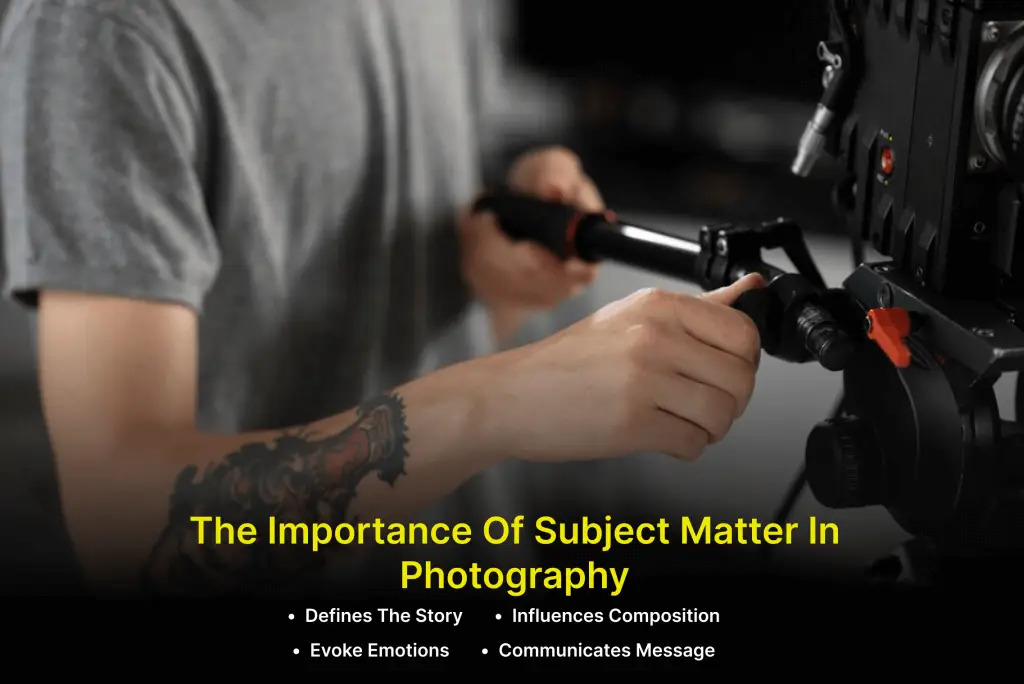
A photography subject defines what should be highlighted in the photo and what should capture the viewer’s attention. Here are four main reasons why the subject matters:
1. Defines the Story
The subject matter of a photograph defines what and how a story will be told. It provides direction to the storytelling, things that should capture viewers attention, and what should be highlighted. For example, the subject of a photo taken within a packed marketplace is hustling activity, which will suggest a feel of energy and community in the frame.
2. Influences Composition
The selection of subject matter influences the composition of the shot. It determines framing, perspective, and how elements in the frame will be arranged. For example, while taking a landscape photo, a simple decision about the placement of the horizon line and the inclusion of foreground elements can impact the composition and overall image.
3. Emotions
Different subject matter can evoke different feelings or reactions in the viewer. For example, a photo of a laughing child can give one a feeling of happiness or warmth. However, a picture in black and white that captures an empty street can make one feel a great sense of loneliness or sadness. Subject matter is the prime factor in evoking an emotional response.
4. Communicates Message
The message, or intent, of the photographer is communicated through the subject matter. Whether your goal is to capture beauty, evoke thought, or capture reality, subject matter plays an important role in conveying the intent of your message. For instance, an image of an environmental protest can show the issue of climate change, presenting itself as food for thought or action.
A famous photographer, W. Eugene Smith, said, “Photography is a small voice at best, but sometimes one photograph, or a group of them, can lure our sense of awareness.”
How Do You Choose the Right Subject for a Photograph?
A good subject-matter choice combines creative instinct with clear intention. The following principles guide photographers toward more deliberate decisions about what they shoot and why.
Define Your Purpose First
Start by asking what this image needs to accomplish. Is the goal to document an event, capture beauty, or convey a message to a specific audience? Defining your purpose narrows the field of possible subjects and helps ensure the chosen subject aligns with your goals. For professionally produced imagery with a defined commercial goal, explore our services to see what FX Productions Canada can offer.
Explore Different Perspectives
Try different perspectives and compositions before committing to a single angle. Experimenting with camera angles, focal points, and distance from the subject reveals unexpected approaches that can make an image more engaging. Changing your point of view is one of the simplest ways to transform an ordinary subject into a compelling one.
Pay Attention to Lighting
Lighting alters how a subject looks and what it communicates. Soft, diffused light creates a gentle, flattering effect, while dramatic, high-contrast lighting adds intensity, emphasis, and depth. Understanding how to position your subject relative to available or artificial light is a foundational skill in professional photography. Our visual effects team also applies lighting principles in post-production to achieve consistent results.
Keep the Composition Simple
Sometimes less achieves more. A clear, uncluttered subject that is not competing with surrounding elements tends to have a greater visual impact. Removing unnecessary elements from the frame draws attention directly to the core subject and makes the image easier for the viewer to read at a glance.
How Subject Matter Shapes Every Image You Capture
The subject matter of a photograph is the basis of the picture. It guides the viewer’s focus and shapes the story told through the image. Good lighting creates mood and clarity, outlining textures to create atmosphere. Multiple angles and perspectives change how the subject reads and add depth to the composition. A strong focal point leads the viewer’s attention to what matters most in the frame.
All of these elements work together to tell a visual story and convey your artistic vision. Being deliberate about subject matter leads to more compelling, powerful images. So the next time you pick up a camera, decide first what your subject is and how you can best capture its essence.
Ready to Plan Your Next Shoot
Subject matter is one of the most important decisions made before a camera is ever picked up. At FX Productions Canada, our team helps clients define what their images should say and who they should say it to. Ready to tell your story with precision? Contact FX Productions to discuss your next project.
Frequently Asked Questions
1. What is subject matter in photography?
Subject matter in photography is the primary focus or theme of an image: the person, object, landscape, or concept the photographer wants the viewer to engage with most. It defines what the image is about and guides every decision around composition, lighting, and framing. Choosing the right subject is the first and most important step in planning a shoot. Our photography services are built around identifying the right subject for each client’s goals.
2. How does subject matter affect the composition of a photograph?
Subject matter determines how all other elements in a frame are arranged. Where you place the subject, how much space surrounds it, and which angle you shoot from are all decisions made in response to the subject itself. A landscape subject might call for a low horizon line and wide foreground. A portrait subject might call for a tight frame that eliminates distracting backgrounds. Composition follows the subject, not the other way around.
3. What are the most common types of subject matter in photography?
The most common types of photography subject matter are portraits, landscapes, still life, abstract imagery, and documentary subjects. Each type serves a different communicative purpose. Portraits emphasize personality. Landscapes convey place and atmosphere. Still life focuses on form and texture. Abstract imagery prioritizes visual and emotional response. Documentary photography prioritizes truth and authenticity. Learn how these principles apply to motion and video through cinematic videography.
4. How do you choose the right subject for a photograph?
Start with a clear purpose: what should the image accomplish and for whom? Once your goal is defined, look for subjects that communicate that message directly and honestly. Then test different perspectives and lighting conditions to find the angle that serves the subject best. Simplicity is usually more effective than complexity. The strongest images tend to have one clear subject that the viewer can identify within the first second of looking at the image.
5. Why does subject matter matter more than technical skill in photography?
Subject matter matters more than technique because a technically perfect image of the wrong subject fails to communicate. The best cameras and lenses in the world cannot compensate for an unclear or poorly chosen subject. Technical skill amplifies a strong subject. Without a strong subject, technique has nothing to enhance. This is why professional productions always begin with a creative brief that defines the subject before any equipment decisions are made. See how this applies to full-service production at our services.
Key Takeaways
- Subject matter is the primary focus of any photograph and the foundation every other creative decision is built upon.
- The five most common types of photography subject matter are portraits, landscapes, still life, abstract imagery, and documentary subjects.
- Subject matter determines composition, meaning the framing, angle, and arrangement of every other element in the image follows from the subject.
- Different subjects evoke different emotional responses, making subject selection one of the most powerful storytelling tools available to a photographer.
- The strongest images have one clearly identifiable subject that communicates a single message without requiring supporting text to explain it.
- Professional productions always define the subject matter in the brief stage before any equipment or crew decisions are made.
- Simplicity, deliberate lighting, and experimentation with perspective are the three most reliable ways to strengthen any subject choice.