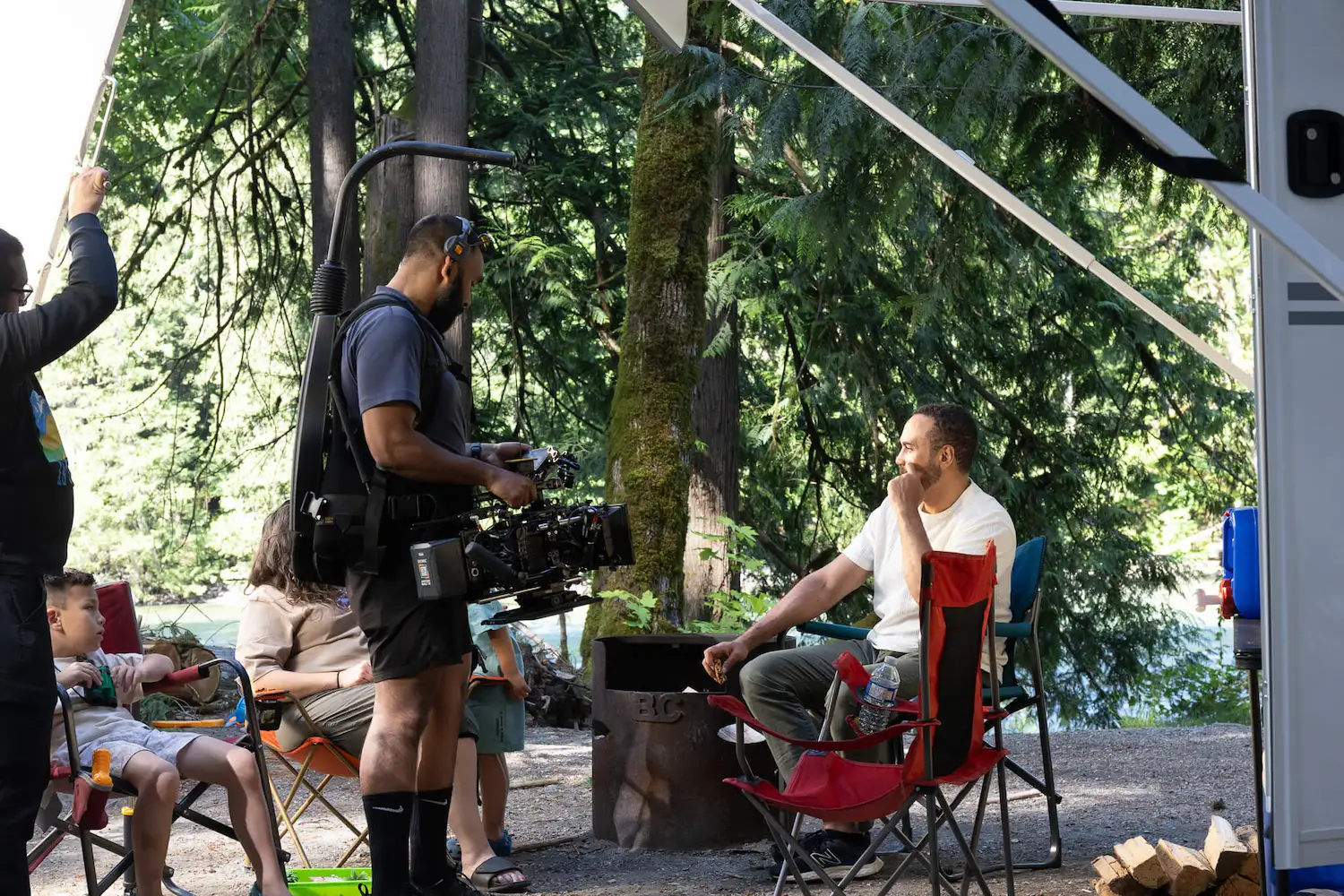
A production crew is the full team of professionals who plan, capture, and deliver a commercial video from the brief stage through final delivery. Understanding who each crew member is, what they own, and why they are essential helps brands brief more accurately, budget more realistically, and get more from every production day. This post explains the core crew positions found on a professional commercial video shoot, how crew size scales with production complexity, and how FX Productions Canada structures its production team across every engagement.
What Is a Video Production Crew and Why Does Its Composition Matter?
A video production crew is the team of individuals whose specific skills and responsibilities combine to produce a finished video deliverable. Each crew member owns a defined domain. The director owns the creative vision. The director of photography owns the camera and lighting execution. The sound recordist owns the audio capture. The production manager owns the logistics. When each person focuses on their domain, the production runs efficiently and the deliverable quality reflects the full capability of every specialist on set.
The specialised nature of these roles is recognised within Canada’s film and video production framework. The Canadian Audio-Visual Certification Office (CAVCO) identifies key creative and producer-related personnel positions including directors, directors of photography, art directors, picture editors, producers, and production managers.
When crew composition is wrong for the project, quality suffers at the specific points where the skill is absent. A shoot with no dedicated sound recordist produces audio problems that are expensive to fix in post. A shoot with no gaffer produces lighting that the camera cannot fully compensate for. A shoot with no production manager runs over schedule and over budget because no one is tracking both simultaneously.
Understanding which crew roles are essential at which production scale is one of the most practical things a brand can know before approaching a video production company for a quote. It allows meaningful comparison between proposals that list different team compositions, and it provides the context to ask whether the team being proposed can actually deliver the standard the brief requires. FX Productions Canada’s full-service production workflow staffs every engagement at the correct crew level for the scope of the deliverable.
What Are the Core Crew Roles on Every Professional Commercial Shoot?
These are the positions present on virtually every professional commercial video shoot regardless of scale. Their absence is a signal that the production is operating below professional standards for the deliverable being proposed.
|
Role |
What They Own |
Why Their Absence Matters |
|
Director |
Creative vision; talent direction; shot-by-shot execution of the creative brief |
Without a director, there is no unified creative vision guiding the shoot |
|
Producer |
Overall production from brief through delivery; budget, schedule, crew, client communication |
Without a producer, no one is ensuring the shoot stays on brief, on budget, and on time |
|
Director of Photography (DP) |
Camera, lenses, and lighting design; visual execution of every frame |
Without a DP, lighting and camera decisions are made by whoever is available |
|
Camera Operator |
Physical operation of the camera under the DP’s direction |
On larger shoots the DP designs; on smaller shoots the DP and camera operator are the same person |
|
Sound Recordist |
On-location audio capture; microphone placement and monitoring |
Without a sound recordist, audio is an afterthought that consistently fails in post |
|
Gaffer |
Lighting design execution; electrical safety and rigging on set |
Without a gaffer, lighting is either simplified beyond the brief or creates safety risks |
|
Production Manager |
Logistics, scheduling, permits, vendor coordination, and budget tracking |
Without a PM, the director spends set time on logistics rather than creative execution |
|
Editor |
Post-production assembly, narrative structure, pacing, and delivery |
Without a dedicated editor, the cut is built by whoever has time, not the right skill |
FX Productions Canada staffs all of these roles in-house or through established production relationships for every commercial engagement. The co-founders Edward Figura and Ali Xerri are directly involved in production leadership across the full-service production pipeline, ensuring that production management and creative direction are both held to a consistent standard.
How Does Crew Size Scale With Production Complexity?
Production crew size scales directly with the complexity of what needs to be captured and the standard to which it needs to be delivered. A two-person crew can produce an excellent interview video. A twenty-person crew is the minimum for a multi-location commercial spot with talent, wardrobe, set design, and broadcast delivery requirements.
|
Production Type |
Typical Crew Size |
Key Additional Roles Added |
|
Interview / talking head (corporate) |
2 – 4 |
Director/DP combo, sound recordist, production coordinator |
|
Product demo / social content |
3 – 6 |
Dedicated DP, gaffer, production coordinator, editor |
|
Corporate brand overview |
6 – 10 |
Production manager, art direction, dedicated sound, multiple camera operators |
|
Commercial spot (digital-first) |
10 – 15 |
Production designer, prop stylist, wardrobe, 1st AD, VFX supervisor |
|
Broadcast commercial (national) |
15 – 30+ |
Full art department, casting director, makeup and hair, 1st and 2nd AD, stunt coordinator if required |
Crew size in a production quote is one of the most reliable indicators of the deliverable quality being proposed. A production company proposing a national broadcast commercial with a crew of five is either misunderstanding the brief, cutting corners that will show up in the final product, or planning to subcontract key roles that the quote does not disclose.
What Additional Specialist Roles Appear on Larger Commercial Shoots?
First Assistant Director (1st AD)
The 1st AD is responsible for keeping the shoot on schedule. On any production with a defined call sheet and a sequence of scenes to capture, the 1st AD coordinates the crew between setups, manages talent availability, and ensures that the director can focus entirely on the creative execution. On commercial productions with a full-service production workflow, the 1st AD is the production management layer between the director and the crew.
Director of Photography (DP) and Camera Department
The Directors Guild of Canada represents professionals working across Canada’s film, television, and screen-based production industry. Its role within the Canadian production ecosystem reflects the specialised nature of positions such as directors, assistant directors, and other production professionals who contribute to the organisation and execution of complex shoots.
Grip and Electric Department
The grip department manages the physical camera support and rigging: tripods, dollies, jibs, and any mechanical movement systems. The electric department, led by the gaffer, handles all lighting equipment, power distribution, and the execution of the lighting design. On commercial shoots with complex lighting setups, these departments can each have multiple members. FX Productions Canada’s cinematic videography team works with established grip and electric relationships across Toronto for productions requiring expanded crew support.
Post-Production Crew
Post-production requires its own specialist workflow rather than simply extending the responsibilities of the production crew. The Canadian Media Producers Organization provides industry resources and represents Canada’s independent production sector, reflecting the broader professional structure supporting producers and production companies across the country. . FX Productions Canada handles all post-production in-house through its colour grading, sound design, and visual effects teams, which means the production crew and the post-production crew work under the same creative brief from day one.
What Should Brands Look for in a Production Crew Proposal?
When reviewing a production crew proposal, the most useful question is whether each proposed crew member has a defined role that maps to a specific production function. A proposal that lists roles without defining responsibilities, or that combines incompatible roles into single positions, signals a crew structure that will create gaps during production.
The second question is whether the post-production crew is part of the same proposal or separate. Production companies that handle post-production in-house under the same team as the shoot crew consistently deliver more cohesive results because the editor, colourist, and sound designer understand the production they are finishing rather than receiving unfamiliar footage from an unknown context.
The third question is whether the named individuals in the proposal are actually available for the proposed dates. Proposals that name an impressive director or DP who is subsequently unavailable and replaced by a less experienced team member are a common source of final-deliverable disappointment. Contact FX Productions Canada to discuss crew composition and availability for your specific production scope and timeline.
Frequently Asked Questions
1. What crew members are essential on every professional commercial video shoot?
Every professional commercial video shoot requires, at minimum: a director to lead creative execution, a producer to manage logistics and client communication, a director of photography to own camera and lighting, a sound recordist to capture location audio, and an editor to build the post-production cut. Larger productions add a gaffer, production manager, 1st AD, art department, and specialist post-production roles. The absence of any of the first five consistently produces a quality gap in a specific area of the deliverable. FX Productions Canada staffs all core crew roles as part of every commercial video production engagement.
2. How large does a production crew need to be for a commercial spot?
A digital-first commercial spot typically requires a crew of 10 to 15 to cover direction, camera department, sound, lighting, art department, production management, and post-production. A broadcast commercial for national placement can require 15 to 30 or more crew members when talent, full art department, casting, makeup and hair, and broadcast quality control are all included. A proposal with a significantly smaller crew for a deliverable at this standard either misunderstands the scope or is planning to deliver at a lower quality level than the brief describes. Visit the FX Productions Canada portfolio to see examples of commercial work and the production standards they reflect.
3. What is the role of a 1st AD on a video production crew?
The first assistant director (1st AD) is responsible for keeping the production on schedule during the shoot day. They manage the crew between setups, coordinate talent availability, call the set, and ensure that the director has uninterrupted time to focus on creative execution rather than logistics. On any commercial production with a multi-scene call sheet and a defined day rate for a large crew, the 1st AD is one of the most directly budget-protective roles on set. Every minute of schedule slippage on a large crew multiplies across every day-rate on the call sheet. FX Productions Canada includes production management disciplines as part of every full-service production workflow.
4. Does FX Productions Canada handle post-production with the same crew as the shoot?
Yes. FX Productions Canada handles post-production in-house through the same team responsible for pre-production and production. The editor, colourist, and sound designer work under the same creative brief as the director and DP, which means editorial decisions are informed by the intention of the shoot rather than by interpretation of unfamiliar footage. This in-house continuity consistently produces more cohesive results and faster revision cycles than productions where the shoot crew and post-production team are separate. The colour grading, sound design, and visual effects capabilities are all in-house.
5. What is the difference between a producer and a production manager?
The producer owns the entire production from brief through delivery: they are responsible for the creative alignment with the client, the overall budget, the hiring of key crew, and the final deliverable quality. The production manager handles the operational logistics within the production the producer has scoped: the scheduling, the vendor coordination, the permits, the call sheets, and the day-to-day budget tracking. On smaller productions, one person often covers both roles. On larger commercial shoots, separating the roles means the producer can focus on creative and client management while the production manager ensures the logistics keep pace. FX Productions Canada staffs both roles as part of full commercial production engagements. Contact FX Productions Canada to discuss crew composition for your project.
Build the Right Production Crew for Your Video
Get the right specialists for every stage of your commercial production, from direction and cinematography to sound, production management, and post-production. Schedule a consultation with FX Productions Canada to discuss your production scope, crew requirements, timeline, and availability.
Key Takeaways
- A professional commercial video production crew includes a minimum of: director, producer, director of photography, sound recordist, and editor. The absence of any of these roles creates a specific quality gap in the final deliverable.
- Crew size scales with production complexity, from 2 to 4 for simple interview shoots to 15 to 30 or more for national broadcast commercials with talent, art department, and full post-production requirements.
- The 1st AD is one of the most directly budget-protective roles on large commercial productions, because every minute of schedule slippage multiplies across every day-rate on the full crew call sheet.
- Productions where the shoot crew and post-production team are the same in-house team consistently produce more cohesive results and faster revisions than those where post-production is handled by a separate external provider.
- When reviewing a crew proposal, confirm that each role has a defined function, that post-production is included under the same team, and that the named individuals are actually available for the proposed dates.
- FX Productions Canada staffs all core and specialist crew roles for commercial and branded content productions, with in-house post-production across colour grading, sound design, and visual effects.