Knowing what to look for in a drone footage portfolio is what separates a production partner selection based on real capability from one based on the most visually impressive reel. A drone portfolio can be edited to look impressive even when the underlying footage quality, stability, and production discipline are inconsistent. This post identifies the specific technical and creative signals that separate genuinely strong aerial portfolios from well-edited but unreliable work, and explains how to evaluate FX Productions Canada against each criterion.
Why Is Evaluating a Drone Portfolio Harder Than Evaluating a Standard Video Reel?
A standard video production reel reveals how well a company handles storytelling, editing, colour, and sound across a range of project types. A drone portfolio requires a different evaluation lens because it must reveal whether the operator can actually fly well, not just whether the footage looks good after post-production.
Post-production tools can stabilise shaky footage, correct inconsistent colour temperature, and mask poor exposure decisions. A reel built from salvaged clips can look polished on a monitor. The evaluation task is to identify, behind the visual presentation, whether the underlying footage was captured with the precision, movement control, and exposure discipline that a professional production requires.
FX Productions Canada’s production portfolio includes named client case studies across automotive, consumer goods, financial services, and real estate, each of which allows the aerial footage to be evaluated in the context of the brief and the final deliverable it supported rather than as an isolated visual reel. When assessing an operator’s technical capabilities, Transport Canada’s Advanced Operations guidance also provides useful context on the certification and operational requirements that apply to more complex commercial drone work.
How Do You Evaluate Movement Quality in a Drone Portfolio?
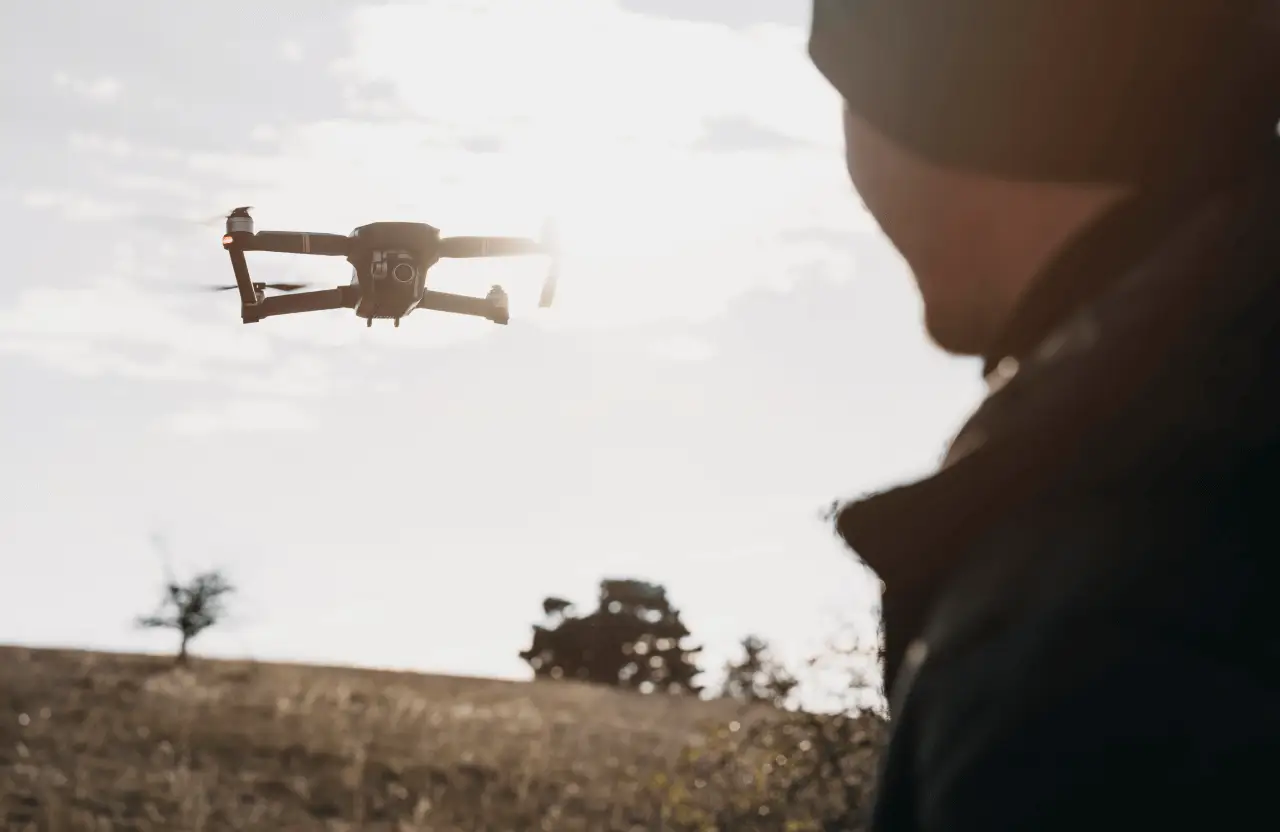
Movement quality is the primary indicator of pilot skill and the most difficult attribute to fake in post-production. Strong drone footage uses single-axis movements executed with full commitment and consistent speed. The drone moves in one direction with intention, holds that direction without drift, and stops cleanly. Poor drone footage uses multi-axis movements that were not planned, wobbles during holds, and accelerates or decelerates inconsistently mid-shot.
When watching a portfolio reel, pause any clip at its midpoint and assess whether the movement direction is clean and single-axis. An orbit that drifts forward or backward is a two-axis move that looks like a mistake, not a decision. A pedestal rise that tilts off-axis during the climb signals a pilot compensating for wind without sufficient stick control.
The benchmark for commercial-grade aerial footage is movement that is “slow and smooth” from the first frame to the last, as described in the industry phrase: slow is smooth, smooth is cinematic. Look for moves that have runway on both ends, meaning the pilot started the motion before the useful frame and continued it after. Footage that begins and ends abruptly suggests the pilot cut the clip at its usable edges rather than capturing clean cinematic videography with intentional head and tail frames.
What Technical Quality Signals Should Be Visible in a Drone Portfolio?
The following technical signals are visible in a well-assembled portfolio and indicate whether the operator is working to professional production standards.
Exposure Consistency Across the Reel
Evaluate whether exposure holds consistently across changing lighting conditions within a single clip. Footage that shows blown-out highlights in sky areas alongside correctly exposed ground-level subjects suggests the operator is not using ND filters to manage the shutter speed and exposure relationship. Professional aerial operators always use ND filters during daylight shoots to maintain the 180-degree shutter rule, which produces natural motion blur and consistent exposure across the frame.
Colour Temperature Consistency Between Clips
Portfolio reels that mix clips with visibly different colour temperatures, some cool blue, some warm, some flat, suggest that either the white balance was not locked during the shoot or the post-production colour correction was not applied consistently. In a well-produced portfolio, all clips from the same shoot should share the same colour foundation even when lighting conditions varied during the shoot day.
Horizon Levelling
A horizon that tilts during a pan or orbit is a gimbal calibration or pilot technique problem. Professional-grade footage maintains a level horizon throughout every move unless the tilt is a deliberate creative decision visible across multiple planned frames. Rolling shutter distortion, visible as a jello-like wobble in the image during fast movements, indicates that the drone was moved too quickly for the sensor’s read-out speed. This is most visible in FPV-style footage but occasionally appears in standard cinematic reel work from operators using inappropriate speed settings. FX Productions Canada’s aerial services team calibrates gimbals and reviews footage quality in the field before leaving any shoot location.
Frame Rate and Motion Blur Appropriateness
A portfolio that mixes 24fps cinematic footage with 60fps sports-mode footage without clear creative intent suggests the operator does not have a defined approach to frame rate selection. Commercial-grade portfolios use 24fps or 25fps for cinematic work consistently, with higher frame rates reserved for slow-motion applications where the intent is explicit.
What Creative Signals Separate Strong Drone Portfolios From Average Ones?
Technical quality is a baseline requirement. The signals that separate a genuinely strong drone portfolio from a technically acceptable one are creative: shot diversity, narrative integration, light quality selection, and subject-appropriate framing.
Shot diversity: A portfolio that contains only orbits and top-downs was built by a pilot who knows two moves well and uses them for every project regardless of appropriateness. A strong portfolio includes pedestal rises, pull-back reveals, tracking shots, parallax orbits, and fly-throughs deployed in contexts where each move serves the narrative rather than simply adding motion.
Light quality: The best drone portfolios are built from footage captured during golden hour and blue hour windows where the directional light creates depth, colour, and dimension that midday shooting cannot achieve. If a portfolio contains mostly flat midday footage, the operator either does not plan shoots around light quality or cannot execute on a schedule that requires early morning or late evening call times.
Named client diversity: A portfolio that lists named clients across multiple industries, for example automotive, real estate, corporate, and consumer goods, demonstrates that the operator adapts their approach to project requirements rather than applying the same visual treatment regardless of context. FX Productions Canada’s portfolio includes aerial work for named clients including Kia Canada, Scotiabank, Manulife, and Liva Foods, reflecting the range of industry contexts in which commercial aerial production has been delivered.
For Toronto productions, airspace planning is another factor worth evaluating when reviewing a drone operator’s portfolio and production process. NAV CANADA’s NAV Drone platform provides tools for drone operators to plan flights, check airspace conditions, and obtain authorisations for operations in controlled airspace.
A strong portfolio should therefore demonstrate more than attractive aerial footage. It should show consistent piloting, deliberate camera movement, controlled exposure, appropriate framing, and the ability to integrate aerial footage into a larger commercial production.
When the production involves filming in Toronto, brands should also consider the location requirements alongside the drone operation itself. The City of Toronto’s filming guidelines specifically identify adding UAV or drone work as a significant filming change, making early production planning particularly important.
What Project Types Should Appear in a Commercial Drone Portfolio?
The project types in a drone portfolio should match the type of work you are planning. A portfolio built entirely around real estate listings does not demonstrate the ability to execute a broadcast commercial, while music festival footage may not show the precision required for an automotive production.
When evaluating a portfolio, look for at least two examples that closely match your project category. For commercial advertising, look for branded spots featuring a defined product or campaign. For corporate and event coverage, look for aerial establishing shots integrated with ground-level footage. For real estate, assess the consistency of exterior, neighbourhood, and property context shots within the same project.
If your project category is not clearly represented, review drone services to better understand the production capabilities available for different commercial applications. This helps ensure the portfolio reflects the specific aerial expertise your project requires.
Frequently Asked Questions
1. What are the most important things to look for in a drone portfolio?
The most important signals in a drone footage portfolio are movement quality (single-axis, consistent speed, no drift), exposure consistency across changing light conditions, colour temperature consistency between clips, horizon levelling throughout every move, shot diversity across multiple move types, light quality (golden hour and blue hour footage), and named client diversity across project categories. FX Productions Canada’s production portfolio includes named client case studies that allow evaluation in full production context.
2. How can you tell if drone footage was stabilised in post-production?
Post-stabilised footage often shows a slight crop at the frame edges, a reduction in field of view compared to the raw sensor, and occasional micro-jitters at the stabilisation boundary. Footage that was captured smoothly by a well-calibrated gimbal and skilled pilot shows no crop, maintains the full sensor field of view, and holds perfectly smooth throughout the move. When reviewing a portfolio, look for consistent framing at the edges of the frame. If the composition feels slightly tight for the lens specification of the drone, post-stabilisation may be compensating for instability. The FX Productions Canada aerial team reviews footage quality in the field before leaving each location.
3. What project types should a commercial drone portfolio include?
A commercial drone portfolio should include examples from at least two to three project categories relevant to your needs. For commercial advertising, look for branded spots with a product or campaign in frame. For corporate and event, look for aerial coverage integrated with ground-level footage. For real estate, look for property and neighbourhood context coverage within single projects. A portfolio that is strong in only one category is not reliable evidence of capability across others. FX Productions Canada’s drone services portfolio spans automotive, real estate, consumer goods, and corporate categories.
4. How does colour grading quality affect what I see in a drone portfolio?
Strong colour grading can significantly elevate the visual impact of drone footage that was technically captured well. It can also mask moderate inconsistencies in white balance and exposure. When evaluating colour quality in a portfolio, look for consistency across clips within a single project: the same warmth, contrast, and saturation throughout. Inconsistency between clips from the same shoot is a sign that the colour was corrected clip by clip rather than graded to a unified look. FX Productions Canada handles all aerial colour grading in-house through the same team responsible for the broader production.
5. Should I request references before hiring a drone production company?
Yes. For any production engagement above a half-day scope, requesting two client references from projects in a similar category is standard practice and should be offered willingly by any reputable production company. References allow you to ask about communication during pre-production, how the shoot day was managed, whether the deliverable matched the brief, and whether the final invoice matched the quote. Contact FX Productions Canada to request references from projects in your specific production category.
Choose a Drone Production Partner With Confidence
A strong drone footage portfolio should demonstrate professional movement quality, technical consistency, creative range, and experience across relevant project types. Schedule a consultation with FX Productions Canada to discuss your project requirements, review relevant drone production portfolio examples, and find the right aerial production approach for your needs.
Key Takeaways
- A drone portfolio must be evaluated for what is behind the visual presentation, not just what the reel looks like after post-production. Movement quality, exposure consistency, and horizon levelling are the primary technical signals.
- Single-axis movements executed at consistent speed with clean starts and stops are the hallmark of skilled pilot execution. Multi-axis drift, inconsistent speed, and abrupt cut points indicate improvisation rather than precision.
- ND filter use is a non-negotiable indicator of professional practice. Footage with blown-out highlights alongside correctly exposed subjects signals that ND filters were not used during the shoot.
- Shot diversity across multiple move types, light quality selection (golden hour preference), and named client diversity across project categories are the creative signals that separate strong portfolios from technically acceptable ones.
- A portfolio should include examples from your specific project type. Strength in one category does not transfer automatically to others.
- Always request client references for projects similar to yours before committing to any production partner, regardless of how strong the reel appears.