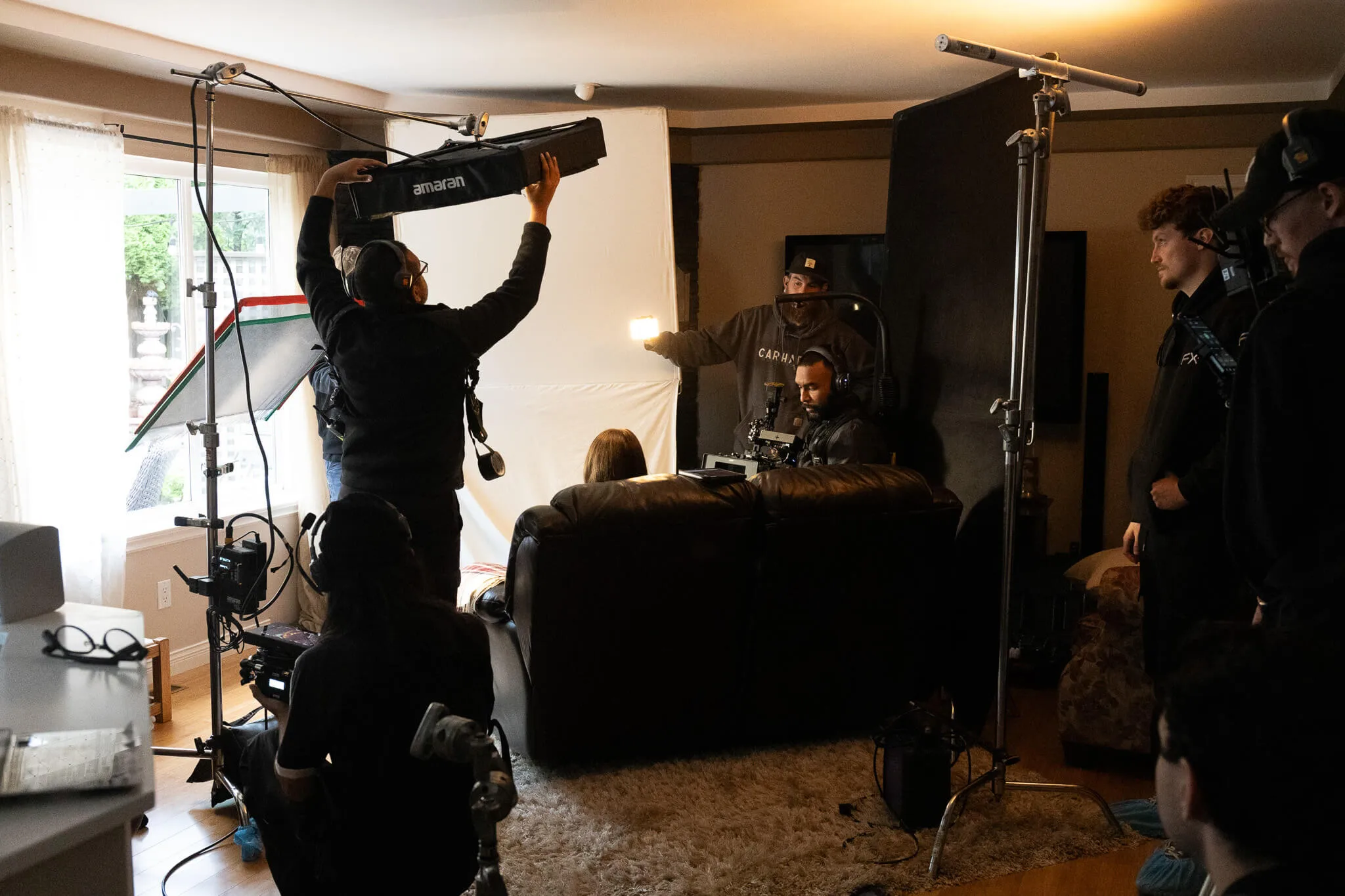
Professional interview video production depends on more than the subject’s message, with lighting, audio quality, and camera setup playing a critical role in how the audience perceives the content. A well-produced interview builds credibility and strengthens brand communication through intentional visual and technical decisions. FX Productions Canada creates professional interview videos for brands across Toronto, Ottawa, and Vancouver by combining strategic planning with high-quality production techniques.
What Is Interview Video Used for in Corporate and Brand Content?
Interview video is a format in which a subject speaks directly or near-directly to camera on a defined topic, captured under controlled production conditions. In corporate and brand content, it is used for executive messaging, client testimonials, employee profiles, subject matter expert content, product education, and thought leadership positioning. It is also one of the primary deliverable types from event coverage, where short interviews capture reactions, insights, and commentary from speakers and attendees.
The format is versatile because it is inherently credible: a real person speaking in their own voice carries more trust weight than a voiceover or an animated explainer. Research such as the Edelman Trust Barometer examines how trust influences the way audiences evaluate organisations, leadership, and brand communications.
But that credibility depends entirely on the production conditions. A poorly lit, poorly captured interview communicates the opposite of what the brand intends: it reads as low-effort, low-budget, and by extension, low-credibility.
FX Productions Canada produces interview video for corporate brands across financial services, automotive, technology, and consumer goods as part of both standalone engagements and as a component of larger full-service production campaigns. The production standards applied are consistent regardless of whether the interview is the primary deliverable or a supporting element.
Why Does Lighting Make or Break an Interview Video?
Lighting is the first and most visible indicator of interview video quality because the viewer evaluates it immediately and subconsciously before the subject says a word. A correctly lit interview subject looks sharp, three-dimensional, and authoritative. An incorrectly lit subject looks flat, harsh, or obscured, which immediately reduces the perceived credibility of whatever they say.
The standard lighting approach for interview video is three-point lighting: a key light positioned at roughly 45 degrees from the subject and slightly above eye level provides the primary illumination; a fill light on the opposite side at reduced intensity softens the shadows the key light creates; and a back light (sometimes called a hair light) positioned behind and above the subject separates them from the background. This three-point configuration produces a dimensional image that looks intentional and professional.
Beyond the three-point setup, the quality and colour temperature of the light sources matters significantly. LED panels matched to a consistent colour temperature (5600K for daylight or 3200K for tungsten) ensure that the subject’s skin tone reads accurately on camera. Mixed colour temperatures between natural window light and artificial sources produce colour casts that require additional post-production correction or, if the difference is too large, cannot be fully resolved. FX Productions Canada’s production team checks and manages colour temperature on every interview setup before any recording begins, consistent with the in-house colour grading standards applied across all productions.
How Does Audio Quality Define Interview Video Credibility?
Audio quality is the single most powerful determinant of whether a viewer stays with an interview video or abandons it. Research consistently shows that viewers tolerate visual imperfections at a much higher rate than audio problems. A slightly soft focus, a less-than-ideal background, or a minor exposure inconsistency will not cause most viewers to stop watching. Muffled, echoing, or background-noise-contaminated audio will cause them to stop within the first thirty seconds at a much higher rate.
The most reliable audio solution for interview video is a dedicated lavalier microphone clipped to the subject, running to a separate audio recorder or directly to the camera on its own dedicated track. A lavalier microphone captures the voice at close range and rejects most ambient room noise, which produces clean, consistent audio regardless of the acoustic characteristics of the room. For two-person or panel interviews, each subject requires their own dedicated microphone channel to allow individual audio management in post-production.
A boom microphone positioned just above and in front of the frame by a dedicated sound recordist is an alternative for single-subject interviews and produces excellent results when the room acoustics are controlled. In larger rooms, reverberant environments, or locations with significant HVAC noise, a lavalier microphone is the more reliable choice. Professional audio recording practices are essential for maintaining clarity and consistency. The Adobe Audition audio recording guide provides guidance on capturing, monitoring, and managing high-quality recorded sound for professional content. FX Productions Canada’s production crew includes a dedicated sound recordist on all interview productions, handling microphone placement, monitoring, and track management throughout the recording. The captured audio is finished by the in-house sound design team in post-production.
What Camera Setup Produces the Best Interview Video Results?
Camera setup for interview video involves three distinct decisions: the number of cameras, the framing of each, and the eye-line relationship between the subject and the camera.
Professional video production requires planning these elements before recording begins. Camera placement, subject positioning, background selection, and lighting direction all influence how effectively the interview communicates the intended message. The Adobe video production guide provides an overview of professional video production principles, including planning, filming, and post-production workflows.
Number of Cameras
A single-camera interview is appropriate for simple talking-head formats, internal communications, and short social content pieces. Two or three cameras allow the editor to cut between angles without jump cuts, maintain visual energy across a longer interview, and accommodate any delivery imperfections by cutting away and returning. For corporate content that will be distributed as a primary brand asset, a two or three camera setup is standard.
Framing
The primary camera on a single subject is typically positioned at a medium shot: chest to head, with the subject slightly off-centre in the frame following the rule of thirds. A second camera captures a tighter close-up that the editor can use for emphasis. The background behind the subject should be clean, relevant to the brand context, and at enough depth behind the subject that it falls slightly out of focus, which focuses the viewer’s attention on the face without creating a distracting or undefined backdrop.
Eye Line
The eye-line relationship between the subject and the camera determines how the interview reads emotionally. A subject speaking directly into the camera lens creates a direct-to-audience connection appropriate for messages that need to feel personal and authoritative. A subject speaking to an interviewer just off-camera to one side creates a more conversational register appropriate for testimonials and subject matter content. The choice between these two approaches should be made at the brief stage, not improvised on set. FX Productions Canada’s directors manage eye-line setup and on-camera coaching as standard elements of every interview production, and the captured footage is edited by the same in-house post team that grades all commercial video production deliverables.
What Is On-Camera Coaching and Why Does It Matter?
On-camera coaching is the process of preparing an interview subject to speak naturally, confidently, and clearly on camera before and during the recording. It is one of the most under-valued elements of interview production and one of the most impactful on the final deliverable.
Most people who are not regularly on camera speak differently when they know they are being recorded. They speak faster, use more filler words, lose the natural pauses and emphasis patterns of ordinary conversation, and develop habits like looking away, touching their face, or shifting in their seat. These behaviours read clearly on camera and reduce the credibility of the content regardless of how well-produced the technical setup is.
A skilled director or producer provides on-camera coaching by briefing the subject on the format before the recording begins, running a relaxed warm-up conversation before any usable recording starts, and giving gentle direction during the recording to manage pacing and emphasis. This preparation typically reduces the recording time needed to capture usable material by 30 to 50 percent and produces content where the subject appears confident and natural rather than scripted or nervous. Effective on-camera communication relies on preparation, clear messaging, and audience awareness. Resources from Toastmasters International provide guidance on developing public speaking and presentation skills that help speakers communicate more confidently. Contact FX Productions Canada to discuss how interview video production fits into your brand content strategy.
Frequently Asked Questions
1. What is an interview video and when should a brand use it?
Interview video is a format in which a real person speaks on a defined topic under professional production conditions, captured on one or more cameras with dedicated audio. Brands use it for executive messaging, client testimonials, employee profiles, subject matter expert content, and event coverage. It is the most credibility-efficient format in brand content because a real voice carries trust signals that scripted voiceovers cannot. FX Productions Canada produces interview video as both a standalone deliverable and as a component of larger brand content campaigns. Visit the production portfolio for examples of corporate and brand interview work.
2. How many cameras should a professional interview video use?
A single-camera interview is appropriate for simple, short-form internal content. Two cameras, covering a medium shot and a close-up, allow the editor to cut between angles for visual energy and to manage any delivery imperfections. Three cameras are standard for panel interviews, roundtable formats, and any interview that will be a primary brand asset in distribution. FX Productions Canada staffs all interview productions with the correct camera configuration for the deliverable, managed by a dedicated director and camera team. Contact FX Productions Canada to discuss camera setup for your interview production.
3. Why does audio quality matter more than video quality in interview video?
Viewers tolerate visual imperfections in interview video at a higher rate than audio problems. Muffled, echoing, or noise-contaminated audio causes viewers to abandon a video within the first thirty seconds at a significantly higher rate than comparable visual imperfections. Every interview production at FX Productions Canada includes a dedicated sound recordist managing lavalier or boom microphone placement, monitoring, and track management throughout the recording. The captured audio is finished by the in-house sound design team in post-production.
4. What is three-point lighting in interview video?
Three-point lighting is the standard professional lighting configuration for interview video. It uses a key light positioned at 45 degrees from the subject to provide primary illumination, a fill light on the opposite side at reduced intensity to soften shadows, and a back light positioned behind and above the subject to create separation from the background. This three-point configuration produces a dimensional, professional appearance that reads as intentional and authoritative. All interview productions at FX Productions Canada are lit to this standard, with colour temperature matched across all sources for consistency in the colour grading phase.
5. Does FX Productions Canada offer on-camera coaching for interview subjects?
Yes. On-camera coaching is a standard element of every interview production at FX Productions Canada. The director briefs the subject on the format before recording, runs a warm-up conversation to establish natural cadence, and provides gentle direction during recording to manage pacing, emphasis, and eye-line. This preparation typically reduces the time needed to capture usable material by 30 to 50 percent and produces a significantly more confident, natural on-camera performance. Contact FX Productions Canada to discuss interview video production for your brand.
Create Interview Videos That Build Brand Credibility
Produce professional interview content with the right combination of lighting, audio, camera setup, and on-camera direction to communicate your message effectively. Schedule a consultation with FX Productions Canada to discuss your interview video production needs and create branded content that strengthens audience trust.
Key Takeaways
- Interview video is one of the most credibility-efficient formats in brand content because a real person speaking in their own voice carries trust signals that scripted voiceovers cannot replicate.
- Lighting is the first and most visible indicator of quality. Three-point lighting (key, fill, back) with matched colour temperature across all sources is the professional standard.
- Audio quality is the most powerful determinant of whether viewers stay with an interview video. Muffled or noisy audio causes abandonment at a higher rate than any comparable visual imperfection.
- Camera setup decisions covering the number of cameras, framing, and eye-line should be made at the brief stage and managed by a director, not improvised on set.
- On-camera coaching by the director or producer before and during recording reduces capture time by 30 to 50 percent and produces a significantly more natural, confident on-screen performance.
- FX Productions Canada produces interview videos for corporate and brand clients with in-house sound design, colour grading, and director-led on-camera coaching as standard production elements.