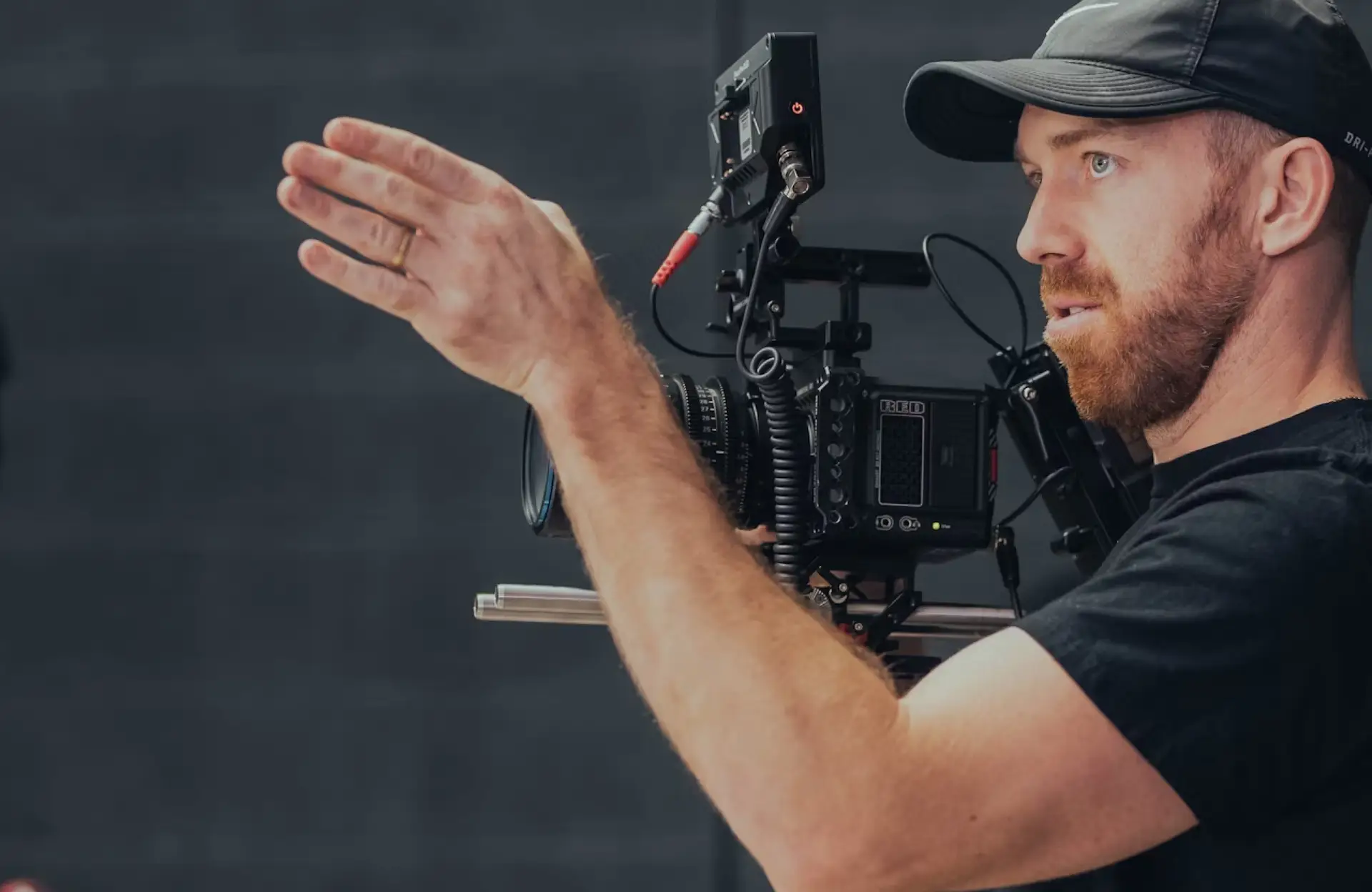
A strong creative brief for a Toronto video production company covers six core elements: brand context, commercial objective, target audience, format and distribution specifications, reference content, and budget and timeline parameters. A well-written brief reduces revision cycles, aligns creative expectations before production begins, and gives the production team the information they need to produce a commercial that performs.
Why Does the Quality of Your Brief Determine the Quality of Your Commercial?
A creative brief is the single document that anchors every production decision from scripting through to final delivery. According to Think with Google, the most common reason commercial video content underperforms is not production quality but creative misalignment between the brand’s intent and the production team’s interpretation of the brief. A vague or incomplete brief is the primary cause of that misalignment.
When you brief a Toronto production company well, the creative team can challenge, refine, and elevate your concept from the very first meeting. When the brief is weak, the production team spends the first stages of the project trying to reverse-engineer your intent rather than building on it. Every revision cycle that follows reflects something that could have been resolved at the brief stage.
What Are the Six Core Elements of a Strong Commercial Video Brief?
A complete commercial brief for a Toronto production company covers six elements. Each one gives the production team a different category of information they need to make confident creative and technical decisions.
Brand Context
The brand context section tells the production team who you are, what you stand for, and how your brand should feel on screen. Include your brand’s visual identity guidelines, tone of voice, any existing content the production team should reference for consistency, and any visual directions or messaging that are explicitly off-limits. Do not assume the production team knows your brand. Even if they have worked with you before, the brief is the moment to restate the context for this specific commercial.
Commercial Objective
The commercial objective is the most important single element of any brief. It answers the question: what should the audience do, feel, or think after watching this commercial? According to Wyzowl’s research, commercials with a clearly defined single objective consistently outperform those briefed with multiple simultaneous goals. State one primary objective and, if necessary, one secondary objective. Any more than two dilutes the creative focus and increases the likelihood of a commercial that achieves nothing distinctly.
Target Audience
Describe your target audience with enough specificity that the production team can make real creative decisions based on it. Age range, geographic focus, income level, and media consumption habits are all useful, but the most important information is the audience’s current relationship with your brand and what you want that relationship to look like after they see the commercial. The difference between ‘adults 25 to 45’ and ‘first-time homebuyers in the Greater Toronto Area who are comparing mortgage providers’ is the difference between a vague brief and a useful one.
Format and Distribution Specifications
Specify exactly where the commercial will be distributed and in what format. Broadcast television, streaming platforms, YouTube pre-roll, Instagram, LinkedIn, and out-of-home digital each have different aspect ratio, resolution, audio loudness normalisation, and safe zone requirements. A commercial production team that knows the distribution specifications from the brief stage can shoot and finish to those requirements rather than attempting format conversion at delivery, which always degrades quality.
Reference Content
Reference content is one of the most underused elements of a commercial brief. Include three to five examples of commercials, brand films, or visual styles that reflect the tone, pacing, and aesthetic you are looking for. Be explicit about what you like in each reference, and equally explicit about what you do not want. References that are shared without annotation are often misinterpreted. A production team that understands what specifically attracted you to a reference can apply that quality to your brief much more accurately than one left to interpret the reference alone.
Budget and Timeline Parameters
State your budget range and your delivery deadline clearly in the brief. This is not a negotiating position. It is practical information the production team needs to scope the project appropriately. The Government of Canada’s business guidance recommends that any professional service brief include budget and timeline parameters to allow accurate scoping before any proposal is prepared. A production company that receives this information upfront can tell you immediately whether your objectives are achievable within your parameters, which saves time on both sides.
|
Brief Element |
What It Enables |
Common Omission |
|
Brand context |
Consistent visual identity and tone in every frame |
Assuming the team already knows the brand |
|
Commercial objective |
A single creative idea that serves a measurable goal |
Listing multiple goals that compete for creative focus |
|
Target audience |
Casting, location, and pacing decisions that resonate |
Describing demographics without behavioural context |
|
Format and distribution |
Technically compliant delivery at every channel |
Specifying format only at post-production stage |
|
Reference content |
Creative alignment before scripting begins |
Sharing references without annotation |
|
Budget and timeline |
A scoped proposal that reflects real constraints |
Withholding budget in hopes of a lower quote |
What Happens After You Submit the Brief?
After a brief is submitted, a professional Toronto production company should respond with a brief interrogation session before building any creative concept or proposal. This is a structured conversation where the production team asks clarifying questions about your brief, challenges any elements they believe will limit creative or commercial performance, and confirms the information they need to write an accurate scope and budget.
The quality of the production team’s brief interrogation questions tells you a great deal about their creative intelligence and their professional experience. A team that accepts a brief without questions is either very experienced with your specific brief format or not asking the questions they should be. The former is a positive signal. The latter is a risk.
How Should You Handle Creative Development After Briefing?
Once the brief is confirmed and a scope is agreed, creative development typically involves a scripting or concept stage, a storyboard or treatment stage, and a pre-production review before the shoot. At each stage, the production team should present a clear rationale for every creative decision, tied back to the objectives stated in your brief. Strong post-production, including colour grading, sound design, and any visual effects, should also be scoped in detail at this stage so there are no surprises at delivery.
How Does FX Productions Canada Handle the Briefing Process?
FX Productions Canada Inc. runs a structured brief review process for every commercial engagement. When a brief is received, the creative team holds a 30 to 60 minute brief interrogation session with the client to clarify objectives, challenge assumptions, and confirm all format and distribution specifications before any creative development begins.
This approach ensures that the commercial produced reflects the client’s actual business goals, not the production team’s interpretation of an incomplete brief. It also means that every creative decision made during scripting, shooting, and our work in post-production is traceable back to a confirmed brief element, which simplifies revision conversations and eliminates the most common source of commercial production disputes.
A Well-Written Brief Is the Best Investment You Make Before Production Begins
The Canadian Media Producers Association recommends that all commercial production engagements in Canada begin with a written brief that has been reviewed and confirmed by both the client and the production company before any scope or budget is agreed. A brief that takes two hours to write properly can save ten hours of revision time during post-production and prevent the creative misalignment that is the single most common cause of commercial video underperformance.
The six-element framework above gives you a repeatable structure for every commercial brief you write. Apply it consistently, share references with annotations, state one primary objective, and confirm distribution specifications before production begins. Every production team in Toronto will produce better work from this brief than from a vague directive, and the best ones will tell you so.
Start Your Commercial Brief with FX Productions Canada
FX Productions Canada Inc. works with marketing teams, brand managers, and creative agencies across Toronto and Canada who are ready to develop commercial video content with a clear brief and a structured production process. The studio offers a pre-brief consultation to help clients build the strongest possible foundation before production begins. Book a consultation with FX Productions Canada.
Frequently Asked Questions
1. What should a creative brief for a commercial video include?
A complete creative brief for a commercial video should include brand context and visual identity guidelines, a clearly stated primary commercial objective, a specific description of the target audience including behavioural context, exact format and distribution specifications for every channel where the commercial will run, three to five annotated reference examples, and a clear statement of budget range and delivery deadline. Omitting any of these elements forces the production team to make assumptions that will require revision time to correct later in the process. Learn more about how FX Productions Canada Inc. approaches pre-production planning through our services overview.
2. How long should a creative brief for a Toronto commercial video be?
A well-written brief is typically two to four pages in length. Longer briefs are not more effective if the additional length comes from repetition or marketing language rather than specific information. The most important attributes of a brief are precision and specificity, not length. A two-page brief that states a single clear objective, describes the audience in behavioural terms, and includes annotated references will generate better creative output than a ten-page document filled with brand values and stakeholder wish lists. Read more about what makes a commercial video production truly effective to understand how brief quality shapes outcomes.
3. What is a brief interrogation session and why does it matter?
A brief interrogation session is a structured conversation between the client and the production team after a brief is submitted, where the team asks clarifying questions, challenges any elements they believe will limit creative performance, and confirms all technical specifications before building a scope or budget. It matters because it is the moment where the gap between the client’s intent and the production team’s interpretation is identified and closed. A production company that skips this step is one that will discover the misalignment later, when it is more expensive to correct. Learn more about how FX Productions Canada Inc. structures client engagement from brief through to delivery.
4. Should I share my budget in the brief?
Yes. Sharing your budget range in the brief is not a negotiating disadvantage. It is practical information the production team needs to scope your project accurately. A production company that receives a realistic budget range upfront can tell you immediately whether your stated objectives are achievable within that range, which saves time on both sides. A company that would exploit budget transparency to inflate a quote rather than scope appropriately is one that would create similar problems throughout the project. Read more about how to plan your next corporate video production for practical guidance on preparing for a scoping conversation.
5. Does FX Productions Canada offer pre-brief consultation?
Yes. FX Productions Canada Inc. offers a pre-brief consultation for all new commercial clients. This session helps clients identify what information is needed for a strong brief, how to frame the commercial objective, and what reference content is most useful to include. Learn more about how FX Productions Canada Inc. works with clients from the earliest stage of a project by visiting FX Production or reviewing our commercial video production overview.
6. How many revision rounds should I expect after submitting a commercial brief?
In a well-briefed commercial production, the scripting or concept stage typically requires one to two rounds of feedback, the storyboard or treatment stage requires one round, and the edited first cut requires one to two rounds depending on complexity. If revision rounds at any stage exceed these benchmarks significantly, the most common cause is insufficient information in the original brief rather than production team error. Every revision cycle that traces back to an unclear objective or an unspecified distribution format was preventable at the brief stage. Read more about how FX Productions Canada Inc. manages creative production workflows and revision cycles.
7. What are the most common mistakes in commercial video briefing?
The most common briefing mistakes are stating multiple commercial objectives instead of one, describing the target audience in demographic terms without behavioural context, omitting format and distribution specifications, sharing reference content without annotation, and withholding the budget range. Each of these mistakes adds revision cycles to the production process. The combination of multiple objectives and no distribution specifications is particularly costly because it affects creative decisions at every stage of production from scripting through to post-production finishing. Read more about common commercial video production mistakes in Toronto to understand how to avoid them before your brief is submitted.
Key Takeaways
- A strong commercial brief covers six elements: brand context, commercial objective, target audience, format and distribution specifications, reference content, and budget and timeline parameters.
- The commercial objective is the most important brief element. State one primary objective. Multiple simultaneous goals dilute creative focus and reduce commercial performance.
- Format and distribution specifications must be included in the brief, not added at the post-production stage. Shooting to the wrong specifications degrades every format conversion that follows.
- References should always be annotated. Sharing a reference without explaining what specifically attracts you to it is one of the most common sources of creative misalignment in commercial production.
- A professional Toronto production company will hold a brief interrogation session before building any creative concept or scope. The quality of their questions is a strong signal of their creative and operational experience.
- FX Productions Canada Inc. runs a structured brief review process for every engagement and offers pre-brief consultations to help clients build a stronger foundation before production begins.